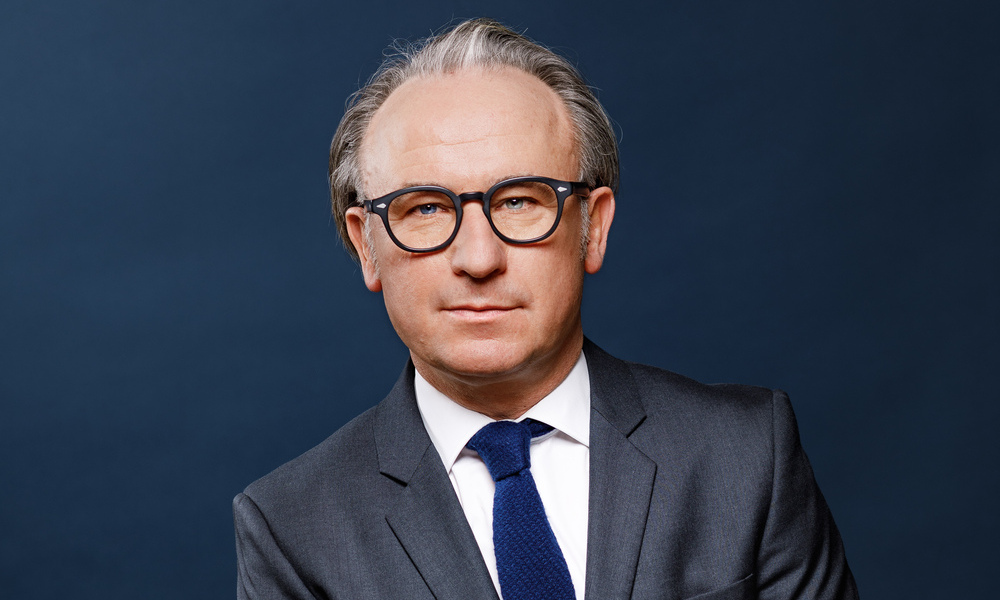
Benoist Lombard: “We talk about responsible investments and then, at the same time, promote crypto currencies.”

The role of a wealth manager is not just to “invest”, but to direct savings in a useful way. But how can they convince their clients not to give in to the temptations of the short term and to invest responsibly? The conclusion of our interview with Benoist Lombard.
Read also: Benoist Lombard: “We don’t provide the same advice to an heir as we do to an entrepreneur”
New, more democratic assets have entered the market. It is no longer necessary to be a millionaire to call on the services of an asset manager!
Absolutely. New instruments such as the ELTIF 2.0 enable savers in the “retail” segment to access unlisted assets which were previously reserved for so-called “professional” or “informed” investors. The regulators previously imposed conditions of size and experience to protect individuals, with the minimum investment of €100,000 acting as a filter.
Today, these limits have been reduced, the regulations have evolved, and products have been redesigned to respond to a broader demand. We can see that the line between retail investment and private management is becoming blurred, and that’s a good thing. It gives savers more powerful tools to be able to diversify their savings in an intelligent way.
How has this transformed the role of the asset manager?
It has changed almost everything. We are no longer simply focussed on products, but on providing strategic support. Advisers have become teachers. They need to understand new asset classes, understand more complex vehicles such as private debt funds, structured products, and temporary dismemberment-style property arrangements. They also need to know how to explain these mechanisms to clients who are by no means experts, but who want to understand where their money is going. Our role is not only to “invest” but is to direct savings in a useful way.
Some assets are labelled as “socially responsible investments” (SRIs) when they meet certain environmental, social, and governance (ESG) criteria. Do they open new investment possibilities, or do they raise questions about sacrificing profitability in exchange for responsibility?
Such investments do not necessarily mean sacrificing profitability, but involve investing differently, and varying these investments. I’ll give you a really simple example. Investing in assets which fund our hospitals, our nurseries, and our bridges may be less profitable than investing in a biotech firm, for example. But if we offer our clients the possibility of investing part of their assets in these infrastructure funds which contribute to the common good and offer sound resilience, the only thing they need to do is to agree to invest in the long term.
And what about cryptos? Three years ago, there was a lot of enthusiasm for them. Is that still the case today?
We are talking about responsible investments, about giving meaning to our savings, about ecology, good governance, national and European sovereignty, social impact, and at the same time we are promoting currencies issued by unregulated actors without central bank supervision. What would have happened if all the central banks had not agreed to flood the world with liquid assets during the COVID crisis? Thankfully, they are there to adjust the temperature within acceptable ranges. Who is regulating crypto assets if it’s not the market? How long will we accept that private actors can mint money? How long will we accept that these currencies produce no wealth, no income, no jobs? Not to mention what they are used for. At Laplace, we do not offer this asset class.