LVMH’s Succession: What It Takes to Become Bernard Arnault

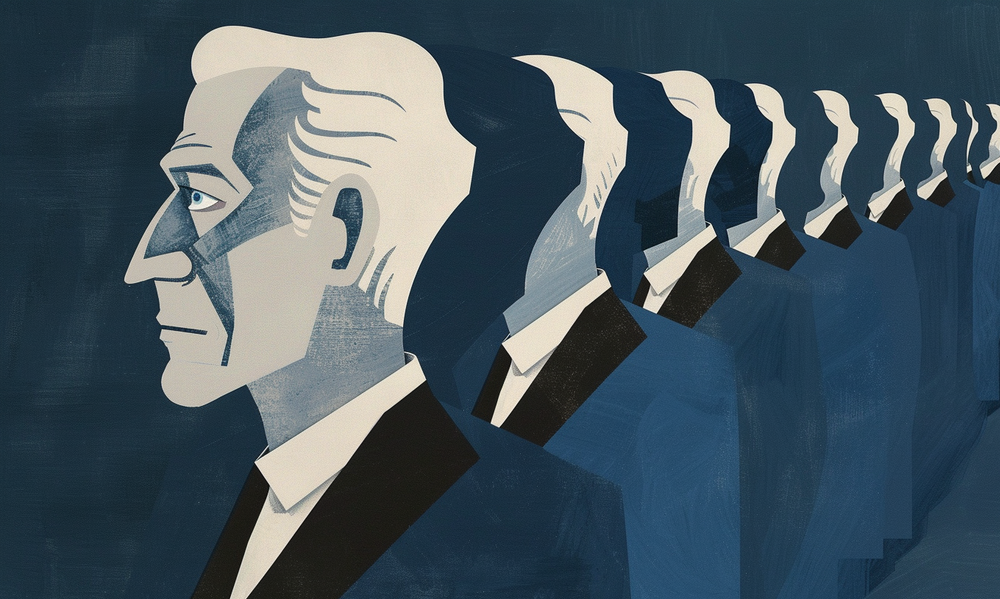
The transfer of power is one of the most sensitive moments in the life of big companies. Between family legacy, governance issues, and strategic planning, these transitions can determine their future. When well-prepared, succession becomes a lever for stability and sustainable performance.
Bernard Arnault is methodically orchestrating his succession at the helm of LVMH, the roughly €350 billion world’s largest luxury group that he founded four decades ago. In early 2024, he appointed two of his sons, Alexandre, aged 33, and Frédéric, aged 30, to the Executive Board of the company, joining their siblings Delphine, aged 50, and Antoine, aged 48. The youngest son, Jean, aged 27, is expected to join in due course. Arnault’s strategy mirrors that of other notable moguls who have designated their offspring to succeed them, such as Amancio Ortega, the founder of Inditex, and Rupert Murdoch, the founder of News Corporation. Marta Ortega was appointed president of Inditex in April 2021, while Lachlan Murdoch assumed the roles of CEO of Fox Corporation and chairman of News Corp. in November 2023.
LVMH serves as a good example illustrating that a crucial aspect of resilience for a company lies in achieving a successful transition, particularly one involving the founder. Often, as in the case of LVMH, successors emerge from within the family fold. After all, approximately 90 percent of enterprises worldwide are family-controlled, totaling around 330 million globally. However, succession is fraught with peril. A scholarly study revealed that 40 percent of CEO transitions result in failure within 18 months. The stakes may be even higher when the transition occurs within the family. Arnault himself is keenly aware of the challenge, having bolstered a significant portion of LVMH by acquiring family companies such as Dior, which had experienced difficulties.
Generational Decline: A Recurring Pattern
French writer Chateaubriand observed that “aristocracy has three successive ages: the age of superiority, the age of privileges, and the age of vanities.” Originating in the first generation, elitism declines in the second, and vanishes in the final stage. This pattern, mutatis mutandis, also holds true in business: the founder establishes the company, the children oversee its operations, and the grandchildren often oversee its decline. According to the consultancy Family Business Institute, only 30% of family businesses endure into the second generation, with a mere 12% remaining viable into the third, and a scant 3% operating into the fourth generation or beyond.
History is replete with instances where companies collapsed or were sold hastily following the demise of their founder. Indeed, many succession failures within companies can be attributed to the founder’s reluctance to plan for the transmission of their business to their heirs. Viewing themselves as indispensable, founders often neglect to prepare for succession, assuming their heirs are unready to assume leadership.
Upon the founder’s passing, unprepared family members reluctantly assume control, striving to learn how to manage the company, often with the assistance of existing executives, all while the survival of the company hangs in the balance. Many falter and ultimately turn to outside executives for guidance.
Read also: Benoist Lombard: “We don’t provide the same advice to an heir as we do to an entrepreneur”
If some companies have achieved sustainability, it is because they successfully navigated the formidable challenge of the initial transfer of power. Their creators demonstrated wisdom by recognizing their mortality and preparing for succession well in advance, echoing an old German proverb: “It is better to have a cold-blooded discussion about my succession while I am still warm rather than under fire when I’m cold.”
Two Types of Succession: Ownership and Management
However, it’s crucial to acknowledge that there are two distinct types of succession: shareholder succession and executive succession. While not a universal practice, some founders opt from the outset to be succeeded by a professional who is not a family member. A window of three to five years prior to a planned exit appears reasonable for identifying and grooming a successor to familiarize them with the forthcoming challenges of the business. For instance, the size and market dominance of LVMH necessitate that its next generation of leaders be increasingly innovative to sustain growth, no longer relying solely on China, which fueled much of the sector’s expansion over the past decade.
All of Arnault’s children have been groomed for their roles from a young age, accompanying him on weekend store checks or expeditions to overseas subsidiaries since their teenage years. Presently, they all hold positions within the group, having been paired with mentors among LVMH’s senior executives. The newly appointed group managing director, Stephane Bianchi, earned previous acclaim at the family-owned French group Yves Rocher for mentoring the grandson of the founder, Bris Rocher, to assume leadership of the company following the founder’s passing in 2009.
Timing and the Balance of Power
The issue of timing then arises. At 77 years old, Arnault has extended the age limit for his role as CEO to 80. He still possesses the opportunity to select his departure date and formally introduce his successor. However, he must strike a delicate balance between his children and a new generation of executives who have comparatively recently joined the company, alongside the established guard, even though the final decision ultimately rests with the family.
While it’s undoubtedly beneficial for founders to consider their succession while still at the helm, it becomes imperative when the transfer of leadership occurs not within the family but between professional managers. Sustainable companies, capable of enduring beyond the century mark, excel in managing this transition. It stands as an undeniable factor in their continued success.