Stephanie Chasserio: “When a Woman wants to make Money, she is always viewed with Suspicion”


Lille’s Chamber of Commerce and Industry (CCI), with its majestic dome, houses an auditorium where Stephanie Chasserio made an appearance on November 13. At the invitation of the Greater Lille CCI, she gave a masterclass on the complex relationship between women and money. This sensitive, taboo subject holds no terrors for the professor and director of the SKEMA Business School Globalisation Academy, whose work focuses chiefly on women’s careers.
When did the prejudice towards women and money begin?
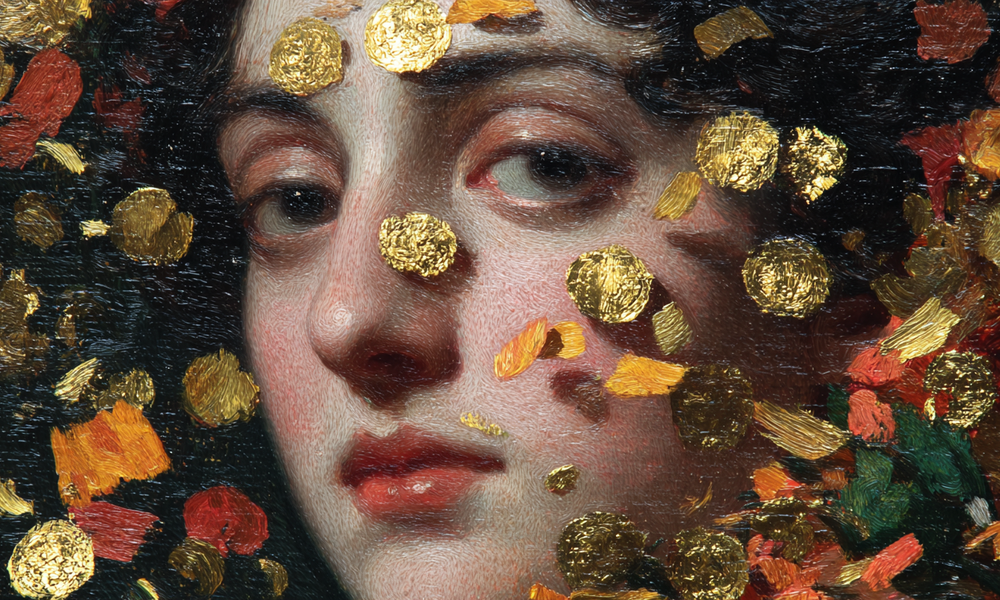
With the Ancient Greek myth of Danaë! Her father locked her away in a tower because an oracle predicted that he would be killed by his grandson. However, Zeus still managed to get to her and seduced her in the form of a shower of gold coins that enveloped her body. Since then, women’s bodies have been associated with money, a corrupting force that destroys their innocence. Based on this myth, artistic representations have almost always linked money and women negatively.
What are the main prejudices that arise from this?
The idea of a venal woman; a woman who cannot count, or who spends money like water. This explains why the subject is taboo: a woman who talks about money is flighty or sometimes even a prostitute. Likewise, women have been largely dispossessed of their wealth and budgetary responsibilities. Historically, it is quite shocking to read advice given to husbands on how much money they should give their wives to restrict their independence. Controlling money is a way of controlling women’s lives. When a woman asks for or “wants to make money,” people are always suspicious: what does she want it for? Even now, these historical prejudices still play a part in the under-representation of women in finance. However, little research has been conducted on this subject.
Danaë still haunts the history of women…
Yes! Contrary to what one might think, this history is by no means linear. From this point of view, the Middle Ages were not as dark a period for women as the Renaissance; for example, female traders and craftswomen had a certain amount of autonomy to do business, and they worked alongside their husbands. However, with the Napoleonic Code, married women became “minors” and lost access to property and work. Similarly, the image of the man as breadwinner and the stay-at-home woman is fairly recent in Western history. It emerged during the Industrial Revolution and the advent of wage earners. This was also the starting point for wage inequality: when women worked in factories, the fact that they were not as physically strong as men was used as a pretext to pay them less.
However, you pointed out that in the West, women have historically worked more in the service sector; does this mean their work is considered an unpaid contribution?
It’s Danaë again: a woman gives herself; she is self-sacrificing. Therefore, the concept of remuneration is not given. For hundreds of years, healthcare was carried out by nuns who were not paid. It was free labour. This still resonates today. Economists such as Gary Becker (the 1992 Nobel Prize winner) have developed a theory of “human capital” and analysed the modern family as a “production unit” in which domestic work creates economic value, even if it is unpaid work. The fact that women take on more of these tasks can be monetized; it has a cost, yet it is performed by women for free. However, when they perform these tasks, they do not do anything else. No one else performs these tasks in their place. What would we obtain if we expressed the domestic and care services performed by women as a percentage of GDP?
Money is not dirty. Women will not be judged for negotiating.
Stephanie Chasserio, SKEMA Business School
Does entrepreneurship have an emancipatory function for women that does not necessarily apply to men?
Absolutely! Women are in control. They designed their own projects. However, even there, we still find a certain degree of conditioning. First, they do not ask for enough money to get started, so their projects sometimes develop more slowly. Second, the businesses they start do not always pay. They are really up against it financially but sometimes say, “Yes, but I’m doing something I love.” That is all well and good, but the primary goal of a business is to make money. Real work on assistance is needed to help them build viable business models that can be sustained.
How can women entrepreneurs rethink their relationship with money?
First, it is vital to realize that money is not dirty. It is the fuel that drives a business. Women must break free from learned behaviors and be bold enough to negotiate. They will not be judged for negotiating. If they are, then what? Women must dare to charge a fair price for their work: nobody should work for free.
They should also stop apologizing, work on their attitude and mindset, and present themselves effectively as leaders, truly inhabiting this position. However, many women do not undergo this procedure.
Finally, they should boldly share their stories and experiences. Many women do not feel comfortable doing this. However, if they are asked to do so, it is because they are considered the right people to do so.
Since 11.31 a.m. on Monday, November 10, 2025, women have been working “for free.’ This indicator, from the newsletter Les Glorieuses, symbolically reflects the wage gap between men and women in France. However, should this inequality be measured solely in terms of money?
Not solely, but everything starts with money. Beyond the fact that this inequality is unjustifiable, money enables women to become autonomous and independent and to leave home if they are abused. Money is not an end in itself but a form of energy. Energy that helps women act as they truly desire. When women have control over their lives, they can change the world.
Read also: Unmasking Anger: Do Women have the right to get Angry (just like Men)?