Charles Fourier: Money is not the Driving Force of Work

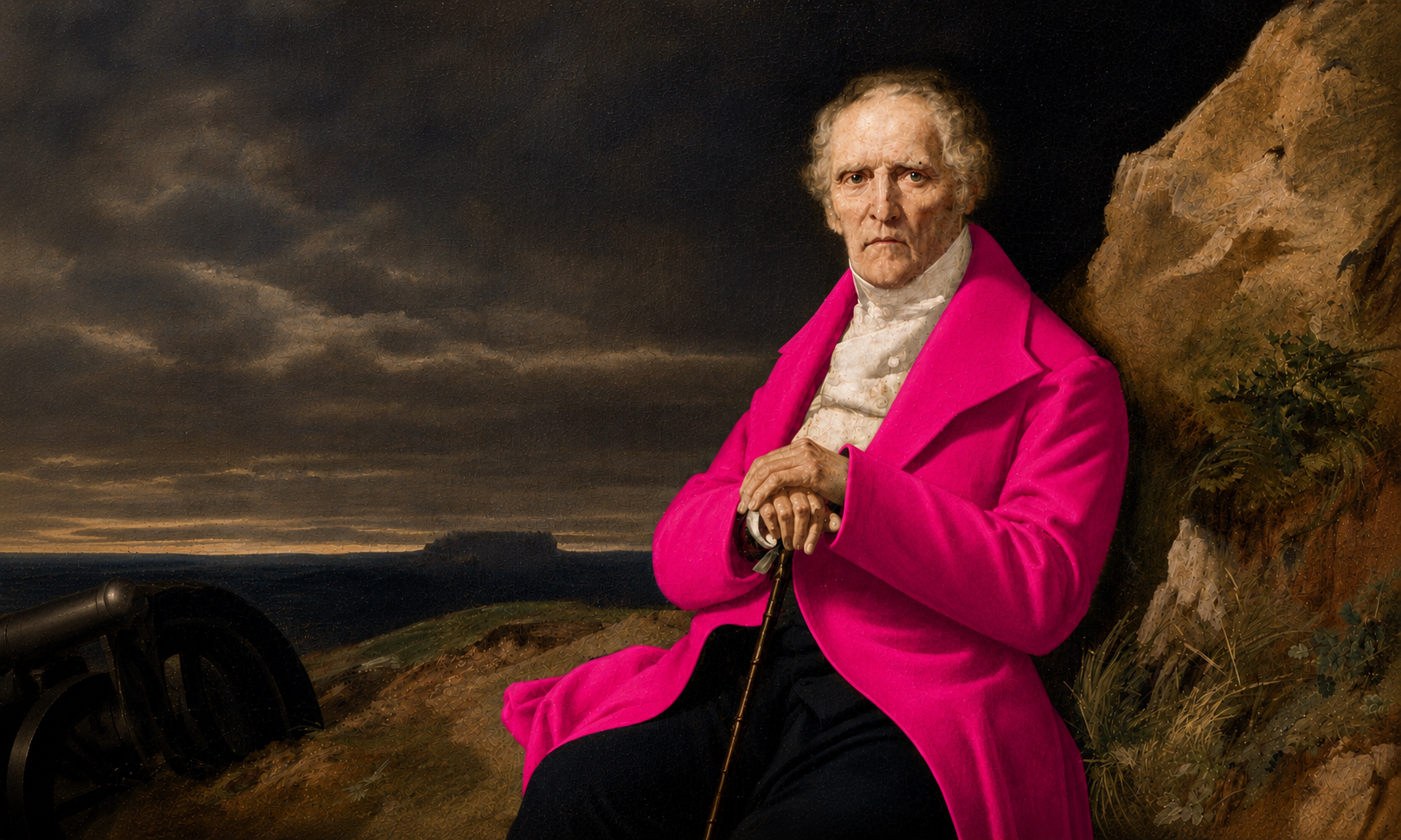
The question of work motivations did not originate on LinkedIn. In the 19th century, the thinker Charles Fourier viewed work as an activity driven by “passionate attraction”- something that requires proper organization.
Charles Fourier (1772-1837) was one of the first thinkers to develop a critique of liberal capitalism. Dismissed by Karl Marx as a utopian socialist, Fourier has alternately been portrayed as an eccentric visionary and an inconvenient inventor. Yet he spent much of his life working as a merchant. One of his central questions remains strikingly relevant today: what truly motivates people at work?
Fourier was probably the most original of the nineteenth-century French utopian socialists, alongside figures such as Claude-Henri de Rouvroy, Comte de Saint-Simon (1760–1825), and Étienne Cabet (1788 -1856). Research I conducted as part of my doctoral dissertation on utopian socialism highlighted a fundamental idea in Fourier’s work: work itself is not the primary driver of human activity. Rather, it is the outcome of underlying motivations – what he called “passionate attraction.”
The central idea running through his writings is that the transformation of production systems, made necessary by economic crises, unemployment, and poverty, should take the form of decentralized collectivism. This model rests on shared ownership, whose fundamental unit is the “phalanx“, or cooperative community.
These new forms of social organization are developed in works such as Theory of the Four Movements (1808), the Nouveau Monde industriel et sociétaire ou invention du procédé d’industrie attrayante et naturelle, distribuée en séries passionnées (1829), the Fausse Industrie morcelée, mensongère et l’antidote, l’industrie naturelle, combinée, attrayante, véridique donnant quadruple produit (1835-1836). Together, these works emphasize not only economic alienation but also emotional alienation, which, according to Fourier, can only be overcome by freeing individuals from the constraints that prevent them from fulfilling their potential.
In this new system, then, what motivates workers beyond money?
Non-Monetary Motivations
For Charles Fourier, recognizing the human dimension of production necessarily means acknowledging non-financial motivations.
In the first volume of la Théorie de l’unité universelle., he criticizes “methods that neglect the broadest and most essential of all studies: the study of Man – that is, of passionate attraction.” A successful organization, he argues, should be built upon the free association of human attractions in order to achieve harmony. In this vision, work and pleasure are not opposites but mutually reinforcing.
The study of work, Fourier argues, should be “the study of social man,” centered on both the social and the passional dimensions – in other words, on the analysis of human motivation. A productive organization must therefore respond not only to the economic and technical requirements of production but also to the psychological needs of its workers.
Luxurious Workshops, Not Factory Prisons
Fourier begins with a simple premise: the physical adaptation of the individual to work.
He insists that factories should be harmonious environments, characterized by what he calls the “luxury of workshops,” and stresses the importance of their impact on workers’ health. A factory, he argues, should never resemble a prison.
He emphasizes the importance of colours, regularly renewed paintwork, appropriate temperatures, and clean working conditions.
Fourier is best known as the theorist of the phalanstery – a term combining phalanx and monastery – an integrated community designed to bring together all the elements necessary for the harmonious life of a cooperative society known as a phalanx.
Work organization should also minimize the distance between workstations. A production process should be distributed among several work groups and broken down into distinct components. In The New Industrial and Societary World, Fourier explains that this division into specialized functions makes it easier for workers to move from one task to another.
The objective is to allow workers to understand how each individual task contributes to the production process as a whole.
Variety as an Antidote to Monotony
Moving between different tasks satisfies what Fourier calls the need for “butterflying“ (papillonne) – the human desire for variety. In La Fausse Industrie, he argues that boredom, resulting from “the monotony of work without diversion,” can be reduced through task rotation. This requires dividing the working day into shorter periods interspersed with regular breaks. As he writes in Volume III of la Théorie de l’unité universelle:
“The objective would be missed if this succession of pleasures did not also contribute to the success of productive industry.”
For Fourier, the working day should therefore be divided into two-hour sessions. This daily organization is not intended to undermine economic performance; on the contrary, it seeks to improve both production and productivity.
Achieving the “Perfection of the Whole” Through Teamwork
For Charles Fourier, the organization of work possesses social and psychological properties that exist independently of technology. Machinery alone cannot satisfy human needs.
It is therefore essential to cultivate cooperation, a sense of belonging, and healthy competition by encouraging collective work.
Here lies the true originality of the utopian socialist. His analysis breaks sharply with theories that associate crowds with the loss of individual responsibility. In Nouveau Monde industriel et sociétaire, he describes a group as “a body united by a shared taste for a common activity.” Men and women brought together by the same passionate attraction.
A group is not merely a collection of individuals. According to Fourier, it consists of stable relationships among seven to nine people. It provides a framework through which individual motivations can be expressed.
Working in a group satisfies the need to understand the meaning of one’s task. Understanding the broader purpose sharpens the desire to contribute to the “perfection of the whole” and to see the work brought to completion.
The Search for Meaning
Fourier refers to this form of motivation as “composite motivation.” Within this framework, emotional considerations become just as important as economic factors such as wages or working hours.
As he explains in Théorie de l’unité universelle:
“The bond would be only a simple one if it merely stimulated industrial competition through the lure of profit. It must also be strengthened by motives drawn from other passions, such as friendly encounters.”
The emotional relationships that emerge within work groups – based on cooperation and healthy emulation – are what Fourier calls the “cabalistic” passion. Financial incentives certainly remain important, but the relational dimension makes human behavior far more complex than purely economic models suggest. As he writes in Theory of the Four Movements: “Members of the group are drawn to work through emulation, self-esteem, and other motives compatible with self-interest.”
Self-esteem encourages us to take others into account. This reciprocal exchange satisfies the need for dignity and for recognition through one’s work.
From Fourier’s writings emerges a remarkably modern idea: increases in productivity often result from the dual imperative of meeting production goals while promoting individual well-being. As he reminds us:”To discover our purpose, two conditions had to be fulfilled. The first was to create large-scale industry, factories, science, and the arts. Once large-scale industry has been established, the second condition remains: the search for the meaning of our lives.”
Cet article est republié à partir de The Conversation sous licence Creative Commons. Lire l’article original.