Want to Know if People Are Angry? Don’t (Just) Look at Social Media

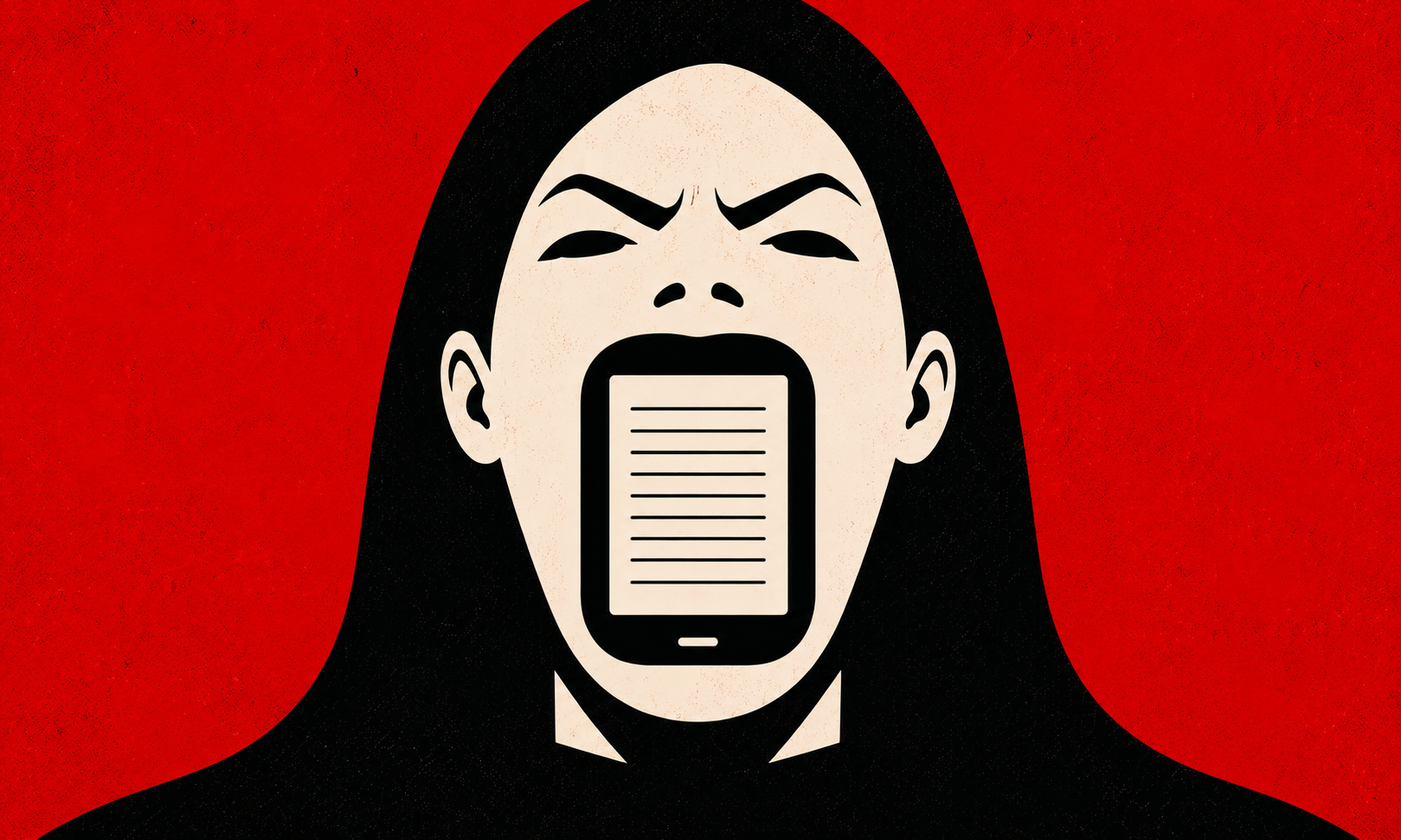
Social media does not have a monopoly on public anger. According to a study by Tom van Laer, Professor of Persuasive Language and Storytelling at SKEMA Business School, together with Sheena Sidhu and Ellen Garbarino, other, less immediate and less moderated spaces for expression – such as self-published e-books and podcasts – offer a better way to detect the rise of public discontent and how it is reflected in the public sphere.
Most organisations now monitor social media to understand what people think. They track hashtags, viral posts, online reviews and sudden spikes in anger. Yet my research with Sheena Sidhu and Ellen Garbarino of the University of Sydney suggests that some of the most important warning signs may not appear in the loudest or fastest-moving places online.
They may appear in slower, more deliberate forms of expression: self-published books, long-form blogs, independent podcasts and other less moderated spaces where people tell stories about unfairness, betrayal and loss.
58 million words analysed
In our study, forthcoming in the Journal of Interactive Marketing, we analysed more than 58 million words from 1,620 self-published e-books published in the United States between 2008 and 2022. We looked for language associated with perceived injustice: words and narratives that suggest people feel wronged, mistreated or denied what they believe they deserve.
We then examined whether these expressions were associated with later changes in two important social and economic indicators: consumer confidence and protest participation.
The results were striking. Increases in perceived injustice language were followed by decreases in consumer confidence around nine months later. They were also followed by increases in protest participation between three and twelve months later. These relationships remained after accounting for broader economic and political factors such as GDP, inequality, inflation, trust in government, voter turnout and election timing.
This suggests that deliberate, less moderated writing may act as an early barometer of social mood.
Social Media is not enough
Social media is useful because it is immediate. A company can see outrage unfold in real time. A policymaker can observe public reaction to a new decision within hours.
Yet immediacy has limits. Many posts are impulsive, brief and emotionally reactive. They are also shaped by platform moderation, algorithms and social norms. What appears online may be what people are willing or allowed to say in public, not necessarily what they are slowly coming to believe.
Longform content is different. Writing a book, essay or extended post requires time and reflection. It allows people to build narratives, assign blame and make sense of their grievances. These stories may capture deeper forms of dissatisfaction before they become visible as market pessimism, boycotts, demonstrations or backlash.
A different kind of early warning system
For marketers, managers and policymakers, the practical lesson is simple: do not only track what is trending. Track what is brewing.
A brand that only monitors viral posts may miss slow-building dissatisfaction. A government agency that focuses only on mainstream platforms may overlook grievances migrating to less visible spaces. A platform that moderates heavily may reduce harmful content in one place while pushing more subtle expressions of injustice elsewhere.
Read also: Chuck Norris Didn’t Become Famous. Fame Became Chuck Norris
Our research suggests that organisations should deepen their listening systems. Alongside social media dashboards and survey data, they should consider long-form, less moderated content as a complementary source of insight into the online “war of words”.
This could help organisations distinguish between high-frequency noise and low-frequency signals. A viral complaint may disappear within days. A repeated narrative of unfairness, told across slower channels, may indicate something more durable.
Public Anger Matters
Consumer confidence and protest participation matter because they affect markets, institutions and everyday life. When people lose confidence, they may delay purchases, reduce spending or withdraw trust from institutions. When perceived injustice escalates, it may motivate activism, boycotts or collective action.
The key insight from our research is that dissatisfaction often has a story before it has a statistic. People explain why they feel wronged before they change how they spend, vote, protest or organise.
For organisations trying to anticipate disruption, the future may not always arrive first as a hashtag. Sometimes it arrives as a paragraph.