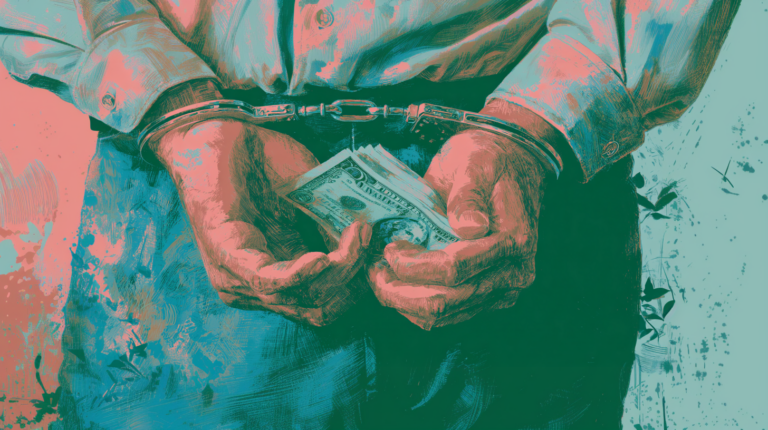
The American prison system, or the business of incarceration






How did incarceration become a market? From private prisons to prison labor, the American prison system reveals the rise of a powerful economy of incarceration. An analysis of a controversial model where criminal justice, profit incentives, and public policy intersect.…

What if you bought a piece of “All I Want for Christmas Is You”?



You might soon enjoy listening to All I Want for Christmas Is You even more. Like many other songs, Mariah Carey’s hit could soon end up on a music marketplace and become yours to own, in part. Music is becoming…
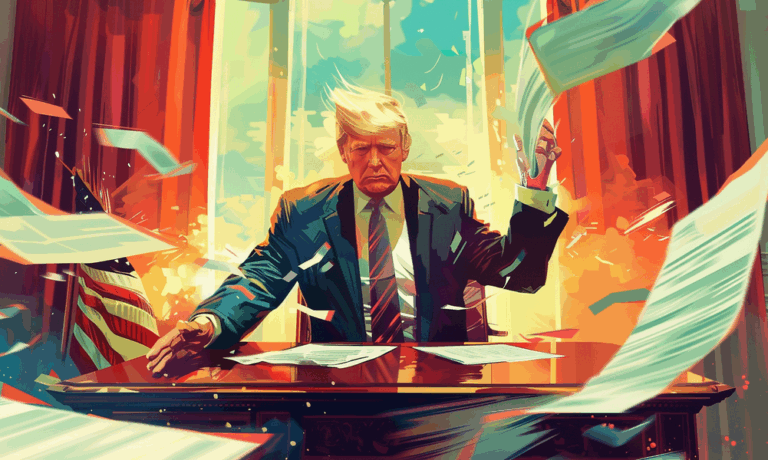
Torn in the USA: Hello Protectionism, Goodbye Free Trade

Recent U.S. customs policies have marked a paradigm shift. Washington is now openly embracing protectionism, with a focus on reshoring production and promoting the ‘Made in America’ movement. This new direction is redefining the rules of the global economy and…
Les plus lus
Why do ex-French Sub-Saharan colonies fare better economically than ex-British ones?

A business model analysis of Kmart’s downfall

FINANCIAL MARKETS, INDUSTRY DYNAMICS AND GROWTH : HOW CORPORATE GOVERNANCE SHAPES MARKET BEHAVIOUR
Are immigrants really taking the jobs of the French (and Americans)?

Instability, a challenge for economic theory and policy
The unexpected relationship between religion and economic development

Medias


All articles

Instability, a challenge for economic theory and policy

Faced with the conjunction of the financial, health and ecological crises, economic thought is in disarray. A deep-rooted idea remains that these crises are mere digressions, from which we should be able to return at the previous state. However, there are grounds for believing the hypothesis that our economic model is undergoing a profound transformation....

Biden’s plan: an American stimulus package with global consequences


After a $900bn package approved in late December 2020, in March 2021 the Biden administration launched a second stimulus worth $1,900 billion, mainly to support households and increase public spending. Shortly afterwards, President Biden announced an investment plan aiming to boost economic growth, together with a plan for families and education.
Economists then asked the effects of such an enormous stimulus on the US economy, wondering whether it would cause it to overheat. They also began to question the global consequences of these two plans.

Does Fintech improve access to finance?



Many claims are made for fintech as a potentially disruptive force – but does it really help firms raise funds and provide new opportunities for investors?

Public investments: why a reread of Keynes is a must
Last March, Joe Biden's first economic recovery plan was adopted by Congress. With a budget of 1900 billion dollars, it is intended to directly help millions of American households. A second $2.3 trillion "Build Back Better" investment plan will invest in infrastructure, education and health care to create millions of jobs and combat climate change. These plans contain fiscal provisions that bring them closer to Keynesian policies.

M&As and Activist Investors Campaigns: do they overlap?



It is relatively understudied what happens if a Merger and Acquisition (M&A) deal combines with an activist investor campaign on the deal itself. In theory, there could be situations where activist investors aim to change the outcome of a M&A through a campaign. Do we observe such cases in reality?

Financial institutions and developing countries’ debt cancellations: How to get rid of moral hazard?

In the recent article published by Journal of Risk Management in Financial Institutions, we observe that the pandemic crisis has revived the issue of debt cancellation for developing countries, placing debt relief on the front burner of multinational institutions and OECD governments. Most often the argument is that social justice should lead to forgiving debts to break the subordination of poor countries with the purpose to ‘reset the counters’....

The unexpected relationship between religion and economic development
Often a hostage to ideological bias, the ties between religion and economic development are a sensitive issue. In adopting a consilience approach, we can cool the debate by demonstrating the complexity of the links, and the sometimes unexpected effects of religion in the socio-economic sphere.

Let’s talk about market contestability

Contestability is a term often used by economists to mean that a market is competitive simply because players can enter and leave freely. This concept has been used to justify deregulation policies implemented to reduce legal barriers in various sectors such as air transport and ride-hailing services.

Will Joe Biden’s stimulus plan for the US economy cause it to overheat?
American GDP figures published on 28 January 2021 show that the country’s economy continued to grow in Q4 2020 at an annualised rate of 4% compared to the previous quarter. This figure follows on from Q3 2020’s mechanically highly elevated…

COVID-19 will not dampen the growth of esports

Initially expected to reach around 1.1 billion dollars, the global esports market was valued at just over 950 million U.S. dollars, a 0.8% difference that can be attributed to the cancellation of tournaments and competitions.
And yet, the long-term forecasts for esports remain favourable. The global market revenue should reach 1.6 billion U.S. dollars in 2023.

INTERVIEW OF RICHARD DAVIES, AUTHOR OF ‘EXTREME ECONOMIES’
In this Second Interview of the ThinkForward Conferences cycle organised by Professors Rodolphe Desbordes and Frédéric Munier,
Richard Davies discusses key insight from his recently published book Extreme Economies

Paul Milgrom, my thesis advisor

This year’s Nobel prize for Economics was awarded to Paul Milgrom and Robert Wilson, both of Stanford University, for their work on auction theory and design.
In the 1980’s, during my doctoral studies at Yale University, I was very fortunate to have Paul Milgrom as my thesis advisor...

Judgment rather than memorization of rules: How to dispel misconceptions about accounting

Since the mid-2000s, corporate financial reporting in many countries around the world is regulated by International Financial Reporting Standards (IFRS). This means teaching an international set of standards to an international audience. Interviewing practitioners and leading academics allows me to demonstrate the diversity of practice hidden behind the homogeneity of the rules and the need for judgment.

What we do not know about crowdfunding yet


Crowdfunding is very new and exciting. It provides new opportunities for startup founding and other activities and proposes creative ways to reward investors. But today, is so new that we are only just becoming aware of all the gaps in our knowledge.

Social bonds: has sustainable market finance reached a new scale?



Given the high economic and social costs of the pandemic and the need for an urgent response, the public and private sectors have progressively turned to new sources of financing, and in particular social bonds. These are a form of sustainable market finance which also include a social dimension.

FINANCIAL MARKETS, INDUSTRY DYNAMICS AND GROWTH : HOW CORPORATE GOVERNANCE SHAPES MARKET BEHAVIOUR



After seeing a gap in the current research, we set out to learn how styles of corporate governance affect the choices companies make and the resulting impact.