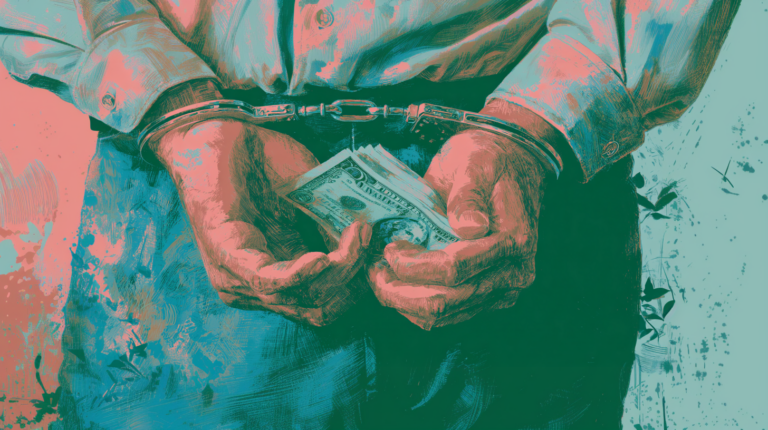
The American prison system, or the business of incarceration






How did incarceration become a market? From private prisons to prison labor, the American prison system reveals the rise of a powerful economy of incarceration. An analysis of a controversial model where criminal justice, profit incentives, and public policy intersect.…

What if you bought a piece of “All I Want for Christmas Is You”?



You might soon enjoy listening to All I Want for Christmas Is You even more. Like many other songs, Mariah Carey’s hit could soon end up on a music marketplace and become yours to own, in part. Music is becoming…

Torn in the USA: Hello Protectionism, Goodbye Free Trade

Recent U.S. customs policies have marked a paradigm shift. Washington is now openly embracing protectionism, with a focus on reshoring production and promoting the ‘Made in America’ movement. This new direction is redefining the rules of the global economy and…
Les plus lus
Why do ex-French Sub-Saharan colonies fare better economically than ex-British ones?

A business model analysis of Kmart’s downfall

FINANCIAL MARKETS, INDUSTRY DYNAMICS AND GROWTH : HOW CORPORATE GOVERNANCE SHAPES MARKET BEHAVIOUR

Are immigrants really taking the jobs of the French (and Americans)?

Instability, a challenge for economic theory and policy
The unexpected relationship between religion and economic development

Medias


All articles

Accounting in Times of the Pandemic – Financial Reporting and Regulatory Issues



Accounting is critical for corporate transparency in such times of high uncertainty. Investors, politicians, and society at large are in need of trustworthy information. At the same time, numerous actors take part in producing, distributing, and processing accounting information: from…

Gender diversity protects stock market investments against the COVID-19 crisis


The justification for socially responsible investing (SRI) is primarily ethical. Taking into account certain variables of corporate social responsibility (CSR) can also be a source of financial outperformance. In this respect, the promotion of workplace gender equality is an aspect of CSR that can contribute to company performance.

Testing-the-Waters to Improve Startup Financing




Since fundraising is time-consuming and entails costs, entrepreneurs may want to “test the water” by soliciting investors’ interest before going through the lengthy process to formally convincing a larger number of investors.

Gender inequalities or the weight of a slow pace of change
Our modern world continues to be plagued by persistent gender inequalities that contrast sharply with the prevailing egalitarian discourse. These inequalities are rooted so deeply in our history that our societies have, in a manner of speaking, “naturalised” them. Of late, some research – notably by Alberto Alesina, a highly respected economist, recently deceased – has endeavoured to shed light on the origins of these inequalities.

Houses of cards, unicorns… and Asian growth
Karl Popper believed that what defined science was its “refutability” or “falsifiability”. Unlike an ideology, a scientific hypothesis can be refuted if it contains errors. Even so, certain errors persist for a long time and lead to house-of-cards conclusions. If…

A business model analysis of Kmart’s downfall


Frequently academic management literature is focused on stories of successful companies. The goal of this type of research is to identify what key elements make a company successful, so others could imitate good practices. In our case, a different path…

The ignored value
Value measurement is supposed to be one of the strengths of our metric dominated economies. And yet, the true value of things is often ignored, at the risk of ending up with catastrophes.

To clear up a common misconception: shareholders do not get rich off dividends

In the midst of the COVID-19 crisis, dividends are the source of many debates and disagreements. On 24 March, the French Minister of the Economy and Finance, Bruno Le Maire, urged French companies to exercise the utmost restraint in paying dividends in 2020 and stated that companies in which the State is a shareholder would be asked not to pay dividends.

Experimenting with a career as an entrepreneur can cost you money




Ever thought about working for yourself, with your own business? Well, think before you act!

Can pay reporting help reduce the gender pay gap?


From the first week of November, women in the United States, Ireland, UK, and around the world are effectively working for free as the gender gap in average pay earnings accounts for remaining two months’ salary of the year. The gender pay gap has remained remarkably constant…

How narcissism prevents successful crowdfunding campaigns


The entrepreneur’s character and talent are an important factor for startup investors. But how does this play out in the crowdfunding setting? We show that the personality trait of narcissism can be an obstacle to fundraising by crowdfunding entrepreneurs. The…

Efficiency and resilience – the resource allocation dilemma
To cope with the high influx of patients, European hospitals called for additional intensive care beds. What if this shortage, in this time of pandemic, was the consequence not of a lack of resources but rather of a dilemma caused…

Coronavirus reveals more than it equalizes
During the coronavirus pandemic, the virus has several times been called “the great equalizer”, indifferent to the social status or age of its victims. A more thorough analysis of the data reveals that this is not the case at all.…

Does the Great Recession imply the end of the Great Moderation? International evidence



Evolution in macroeconomic volatility Time-varying uncertainty about macroeconomic conditions, generally measured by the variance of its GDP growth (what we will call here macroeconomic volatility) has been shown to be harmful for economic activity in many countries. The main reason…